



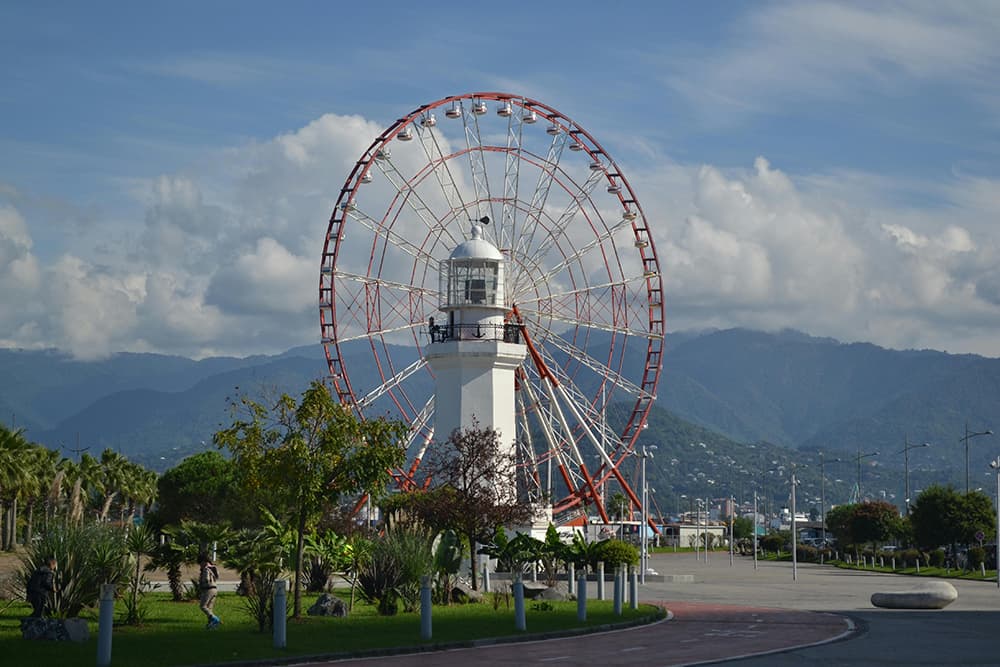
The Tbilisi–Batumi drive is the classic first road trip in Georgia — 370 kilometres from the mountain capital to the Black Sea coast, crossing the whole country from east to west. With a sensible pace and two or three stops it becomes one of the best day trips you can take in a rental car, and with an overnight at the halfway mark it turns into a two-day loop through the country's most photogenic towns.
The route in one paragraph
Follow the S1/E60 highway west from Tbilisi through Mtskheta, Gori, Khashuri, the Rikoti Pass, Zestaponi, Kutaisi and Samtredia to Batumi. The whole route is 370 km on an almost entirely dual-carriageway highway that has been progressively upgraded over the past decade and is now close to European motorway standard. Driving time without stops is 5 to 5.5 hours; with sightseeing plan for 8–9 hours door to door, or split the trip into two days with lunch and an overnight stop in Kutaisi.
Leaving Tbilisi: Mtskheta first
Mtskheta, the ancient capital of Georgia, sits only 20 km northwest of Tbilisi and is signposted clearly from the highway. The short detour to Jvari Monastery on the hill above the confluence of two rivers is unmissable on a first trip and adds only 45 minutes to the drive. Park in the paid lot for 3 GEL, walk the cobbled approach to the 6th-century church and take the panorama shot that has appeared on Georgian postcards for decades. You will be back on the highway within an hour, already with one memorable stop behind you.
Gori and Uplistsikhe
Gori is 50 km further west and has two famous stops: the cave city of Uplistsikhe a few kilometres off the highway (allow 1–1.5 hours including the walk through the caves themselves) and the Stalin Museum in town for those interested in 20th-century history. Uplistsikhe is genuinely worth the detour — it is one of the oldest inhabited sites in the Caucasus and the sandstone passages carved directly into a cliff are both beautiful and educational. The Stalin Museum is more divisive and often skipped by travellers with limited time.
The Rikoti Pass and the new tunnel
The mountain section between Khashuri and Zestaponi, known historically as the Rikoti Pass, has long been the slowest part of the drive because trucks grind up the gradients at 30 km/h. A massive infrastructure project — a 51 km bypass with tunnels and viaducts — is progressively opening through 2025 and 2026. By mid-2026 the eastern half of the new route is already in use and saves about 45 minutes compared with the old road. Follow your GPS and the road signs; if you are routed through the old road because of construction, simply enjoy the forest and the slower pace.
Kutaisi and the western stops
Kutaisi is the natural halfway point at roughly 230 km from Tbilisi and the most sensible place to stop for lunch or stay overnight. Bagrati Cathedral sits on a hill above the old town with a free car park and sweeping views across the Rioni valley; the market in the centre is lively and good for cheap khachapuri straight from the oven. Prometheus Cave, 20 km further west, is a walk-through cave system with an underground river and a short boat ride that takes about 1.5 hours total and costs 23 GEL — a rewarding detour even for travellers who are not usually cave enthusiasts.
Optional detour: Martvili Canyon
If you have a full day and are travelling in summer, the canyon at Martvili is a small detour north from Samtredia of 30 minutes each way. It rewards with turquoise water, short boat rides through a gorge and a few waterfalls. Most first-timers skip it on the day drive to Batumi and save it for the return. It is genuinely stunning but adds roughly two hours to the day, so only attempt it if you started early and the weather is clear.
Fuel stops along the way
Fill up before leaving Tbilisi and plan a second refuel in Khashuri or just before Kutaisi. Roadside cafés and service stops appear every 30–40 km, and the Rompetrol and Wissol chains have full-service stops around Gori, Khashuri and Kutaisi with clean toilets, real coffee and hot food. Pay toilets cost 1 GEL and are always well maintained — use them rather than the free ones at smaller stands, which vary wildly in quality. Budget around 70–90 GEL for fuel in a mid-size car for the one-way trip.
Road conditions and what the route demands
The entire route is fully paved and in good condition — a standard sedan is perfectly adequate, and there is no need for a 4x4 or an SUV. The only section that demands attention is the mountain climb of the Rikoti Pass on the old road, where heavy trucks slow the right lane and overtaking requires good judgement. Stay in the left lane, keep your distance, and do not feel pressured to match the pace of impatient local drivers. Speed cameras are frequent after Kutaisi — stay within 110 km/h on the motorway and 90 km/h on undivided sections.
Tolls and hidden fees
Good news: there are no tolls on the Tbilisi–Batumi route as of 2026, even on the new Rikoti tunnel sections. The only paid elements on the whole drive are paid parking at some attractions — Mtskheta, Uplistsikhe, Bagrati — and fuel. No surprise fees, no vignette stickers, no weekend congestion charges. It is one of the simplest and cheapest long-distance drives in the region for tourists.
Arriving in Batumi
Paid parking covers most of central Batumi. Hotels near Batumi Boulevard have dedicated lots, typically 10–15 GEL per day; check with your hotel before arrival to avoid circling the block in evening traffic. For the boulevard itself, the underground parking near Europe Square is the most convenient drop-off and costs 2 GEL per hour. Batumi's centre is walkable, so park the car and explore on foot — driving the narrow old-town streets in the evening is slower than walking and much more stressful.
When to go and when to avoid
Weekdays are clearly preferable to weekends. On Fridays after 17:00 and on Sundays before 19:00 the highway is busy with Georgians returning to and from the coast, and travel times stretch considerably. Summer traffic peaks in August when every family is moving between city and beach; spring and autumn are the most comfortable seasons for the drive with mild temperatures and quieter roads. Winter brings shorter daylight — leave Tbilisi at 7:00 to arrive before dark in December or January, especially if you plan sightseeing stops.
Returning or flying back
Many travellers drive one way and fly back. Wizz Air, Georgian Airways and SkyUp operate the Batumi–Tbilisi flight in 45 minutes at under 100 GEL if booked a few days in advance. merent operates a one-way drop-off service between Tbilisi and Batumi for a fixed fee of 80 GEL — much less than a taxi back and far easier than flying with heavy luggage. Simply leave the car at the Batumi office, we handle the paperwork, and you fly, bus or train home.